The Cobalt Column: Kitchen Paper Towel Holder with a Champagne-Tone Stem & Walnut-Tone Cap
The Cobalt Column: Kitchen Paper Towel Holder with a Champagne-Tone Stem & Walnut-Tone Cap
Couldn't load pickup availability

The Cobalt Column: Kitchen Paper Towel Holder with a Champagne-Tone Stem & Walnut-Tone Cap

A daily essential with a point of view. 🔵
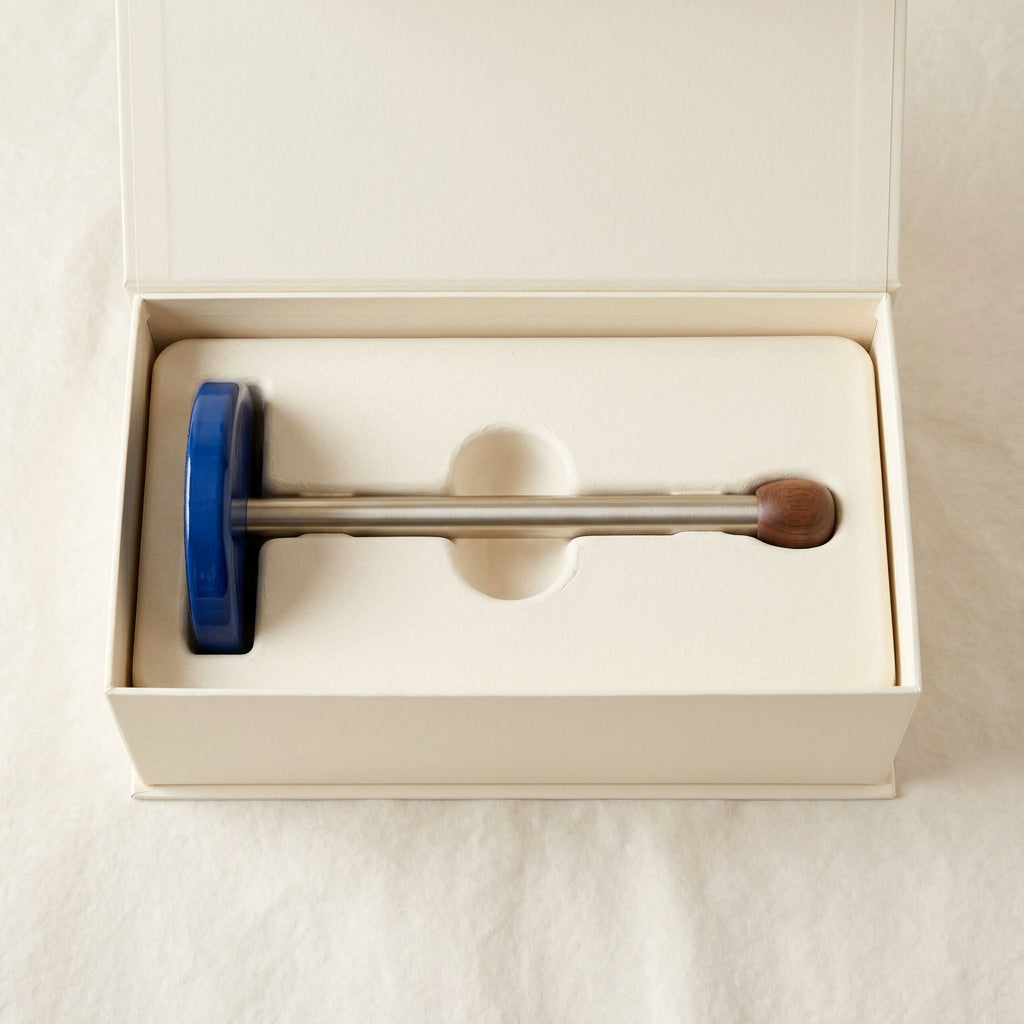
Paper towels are rarely the most considered object on a kitchen counter, yet they are often one of the most visible. The Cobalt Column gives that everyday roll a deliberate setting: a round blue base, a straight champagne-tone stem, and a small walnut-tone cap. The silhouette is simple enough to work alongside other kitchen pieces, while the saturated base adds a clear note of colour. It is an uncomplicated freestanding holder, not a machine or a dispenser with hidden moving parts.

Read the three-part silhouette
The base creates a low circular platform. The central stem rises in one clean line, and the rounded cap finishes the top with a warmer tone. There is no separate pressure arm running along the side of the roll. That keeps the outline open and makes the empty structure easy to understand in the product photograph. When a suitable roll is installed, a little of the base and cap remains visible, giving even plain white paper a more coherent place on the counter.

Before loading: check the roll you use
Kitchen rolls vary in height, outside diameter, and cardboard core size. Check all three rather than assuming that every product described as a kitchen roll is the same. The roll should slide over the stem comfortably and sit on the base without covering its edge in an unstable way. Leave sufficient stem clearance for the cap to return to its normal position. Do not force a tight core onto the rod or use a roll that prevents the holder from being assembled as intended.
-
Step one: make a clear space
Set the empty holder on a level, dry counter with enough room above it to lift a roll vertically. Keep nearby plates and glassware out of the loading path. Steady the base while removing the top cap gently, and put the cap somewhere it will not roll into a sink or behind an appliance. You should not need to bend the stem to reach the top. If the holder is under a low shelf, move it to an open surface before changing the roll.
-
Step two: lower, do not force
With the cap removed, guide a compatible paper roll over the central stem and lower it until its bottom rests on the base. Keep the roll upright as it moves down rather than tilting the core against the rod. Return the cap gently without overtightening. Check that the roll can turn freely enough for your chosen paper and that the base remains fully supported on the counter. The paper should not be suspended halfway up the stem or balanced on surrounding objects.

-
Step three: steady and separate
To take a sheet, steady the base with one hand and draw the loose end with the other. Separate the paper along its own perforation, using a controlled movement rather than a sharp upward tug. This is not described as a one-handed tear system or a tension-controlled dispenser. Different papers behave differently, especially as a roll gets smaller. The open design keeps the action visible and straightforward: hold the base, pull the paper, and tear where the sheet is intended to separate.

Choose the position by the task
Near a preparation area, leave enough free space to pull a sheet without knocking a bowl. At an island, set the holder away from the edge so that reaching for paper does not risk pushing it over. Keep it clear of hob flames, hot pans, steam, and splash zones. A paper roll should remain dry and away from heat regardless of the holder's finish. The best location is accessible during the work you actually do, not merely the spot that looks most symmetrical.

Cobalt, champagne, and a little wood
The base supplies the strongest colour, so the remaining elements stay restrained. A brushed-looking metal stem is less visually busy than an ornamental framework, and the cap introduces a warm rounded shape above the paper. In a pale kitchen, cobalt becomes a small focal point; against dark timber, it sits within a deeper palette. Plain white rolls leave that contrast clear. You do not need patterned paper or several matching blue accessories to give the piece a finished appearance.

Not a fixed installation
The holder is freestanding and is not designed here as a wall-mounted fitting, under-cabinet rail, or attachment to an appliance. It has no side arm to adjust and no separate cutting blade. Before moving it, remove loose sheets that could trail across the counter and support the base rather than lifting the whole assembly by its cap. Do not use the stem as a hook for towels or tools. Keeping the purpose simple helps the structure remain visually quiet and easy to use.
A clean base for a clean roll
Remove the paper before cleaning the holder so that a damp cloth does not wet the roll. Wipe the base and stem gently, then dry them before loading fresh paper. Attend to the area around the stem connection, where crumbs can collect, without levering the rod sideways. Avoid abrasive pads and do not leave the wood-tone cap soaking in water. Clean the counter beneath the base as well. A holder moved occasionally is easier to maintain than one permanently surrounded by other objects.
When the last sheet is gone
Replace the roll when it suits your routine rather than leaving a loose replacement beside an empty holder for days. Remove the remaining cardboard core, check the base for crumbs, and load the new roll with the same careful movement. Keep spare rolls somewhere appropriate and dry instead of stacking them on the stem or balancing them over the cap. One visible working roll is the point of this design: a simple, complete station with no extra paper piled around it.
In the box, and on your counter
Your purchase is one paper towel holder with its cobalt-coloured base, central champagne-tone stem, and matching walnut-tone cap. Paper rolls, bowls, cups, and other kitchen styling accessories are not included. The gift-presentation view shows the empty holder protected in plain, unbranded packaging rather than supplied with a decorative paper roll. Check compatibility with the rolls you normally buy and choose a suitable counter position. It is a modest daily object, given a little more attention to colour, proportion, and the way it is used.